How to consider the true carbon credentials of our projects
March 06th 2026
The construction industry is taking its first steps with measuring embodied carbon. There are differing opinions on how to account for carbon that is removed from the atmosphere and stored. This results in various claims of carbon negative credentials of products and construction systems, but are they accurate? Unfortunately, there is no centrally regulated assessment procedure so claims can be made freely. This creates a tricky environment for clients and designers to navigate. Anderson Bell Christie (ABC) through their White Paper, Balance, have developed specialisms in circular construction and place-based carbon calculations. This has allowed them to establish national roadmaps and bring clarity to this area.
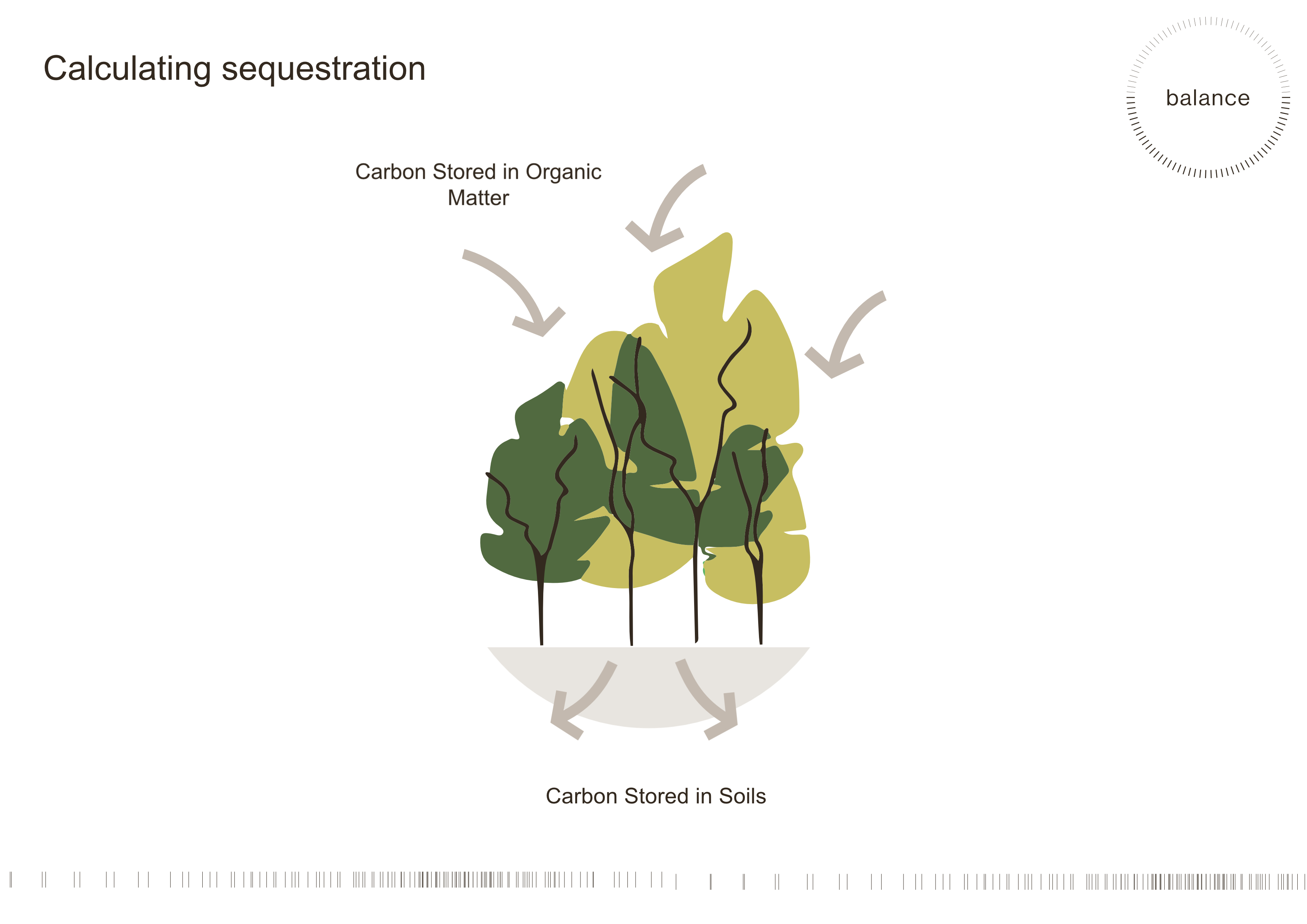
The process of removing carbon from the atmosphere is known as sequestration. There are two main options available for carbon sequestration in construction projects. Firstly, locking carbon into physical construction components (biogenic carbon) and secondly, capturing carbon through living biomass and soils.
When calculating a life cycle assessment, ABC do not consider that locking carbon in physical components is a viable solution. No organic building component can last forever, so instead, we must create the opportunity for building components to have multiple lives before they eventually release their stored carbon. As such, we consider that permanent carbon sequestration related to building components should be excluded from any carbon life cycle assessment.
Carbon sequestration is a fundamental part of achieving Balance, so landscape design and nature-based solution must become a fundamental principle for future construction projects.
Tree species are among the best custodians of carbon and sequestration can be achieved using carefully selected native tree species, maintained and replaced over long time periods.
Ongoing, careful management of woodland and urban tree planting is essential, as it will allow replacement of trees before they go into significant decline. This allows a significant mass of carbon to be captured and stored in living biomass and soils.
Trees also have additional benefits that can ameliorate the impacts of climate change when used in the built environment, such as water management, solar shading and air filtration as well as community health benefits. For all these reasons, extensive tree planting should be considered both around and within the built environment.
Anderson Bell Christie now offer carbon sequestration calculation services for individual trees and woodland. ABC use the robust, academic research supported, iTree and Woodland Carbon CO2de methodologies; please contact us for further information.
The Balance White Paper can be read in full at www.balance.andersonbellchristie.com